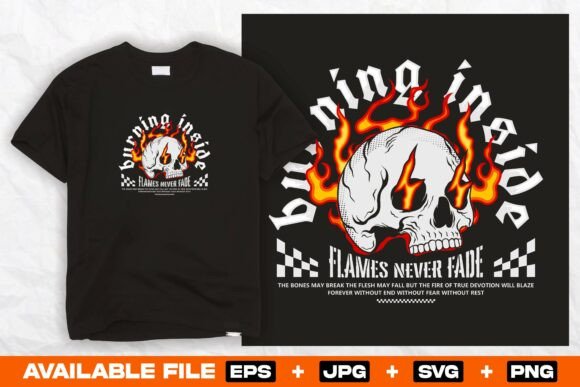
Skull Flames Urban Streetwear Design
First Impression: Bold, Unapologetic, and Ready for Texture
When I opened Skull Flames Urban Streetwear Design, my first thought wasn’t “cool”—it was “this will stitch with attitude.” The skull isn’t cartoonish or cute; it’s grounded, asymmetrical, and full of intentional negative space. Flames curl *inside* the cranium—not around it—giving it a contained intensity. Paired with bold, slightly uneven typography, the whole composition feels like street art caught mid-spray: raw but deliberate. As an embroidery designer who’s stitched everything from baby onesies to boutique aprons, I immediately saw where this design belongs—and where it doesn’t.
A Real-World Test: Embroidering It on a Heavy Cotton Tote Bag
Last week, I used Skull Flames Urban Streetwear Design for a custom order: a 14” x 16” canvas tote for a local skate shop’s staff giveaway. I resized it to fit a 5” hoop (centered on the bag’s front panel), chose matte black thread on charcoal fabric, and backed it with medium-weight cutaway stabilizer. The result? Sharp edges, legible lettering, and flames that read as texture—not mush. Customers didn’t just notice it—they paused. That’s the difference between decoration and presence. This design carries weight, literally and visually. It works because the vector-based construction holds up under scaling, and the 100-shape build means no hidden raster artifacts muddying the satin stitch edges.
Where It Shines—and Where It Needs Guardrails
Skull Flames Urban Streetwear Design excels on structured, medium-to-heavy fabrics: sweatshirt embroidery, embroidered patch backings, denim jackets, and thick tea towels. Its strong silhouette reads clearly even at 3.5” wide—ideal for caps or baby embroidery if you simplify the flame detail first. It also translates beautifully into printable mockups for Etsy sellers: the high-contrast layout pops in digital previews without needing filters or overlays.
But here’s what I’d flag for craft business owners and small shop product developers: avoid using it full-size on stretchy knits (like lightweight t-shirts) without significant digitizing adjustments—those sharp angles can pucker. Tiny hoops (<3”) will struggle with the inner flame linework and tight kerning in the typography. And on dark fabric? Test thread colors carefully. A warm orange flame against navy looks fiery; the same thread on black can vanish unless you add a subtle fill stitch layer or switch to metallic gold.
Design Integrity in Motion
This isn’t just a graphic—it’s a design asset with built-in versatility. Because it’s made with 100 vector shapes, resizing doesn’t degrade clarity, and color swaps are intuitive (I tried deep burgundy flames + charcoal type on oatmeal linen—elegant, not edgy, but still cohesive). That flexibility matters for handmade product lines: one file supports multiple SKUs, seasonal palettes, and brand-aligned variations without redrawing.
For Etsy sellers, that means faster listings and consistent visual storytelling. For apparel decorators, it means fewer client revisions—customers recognize the mood instantly. And for holiday embroidery or personalized gifts? It adds instant personality without sacrificing craftsmanship. A skull-flame pillow cover for a teen’s room or a limited-run embroidered apron for a tattoo parlor’s staff—both land because the design feels intentional, not clip-art.
Practical Embroidery Designer Notes You Can’t Skip
Before stitching Skull Flames Urban Streetwear Design on your next project, do these five things:
- Test on scrap fabric first—especially if using textured weaves (like burlap or looped terry) where flame details may snag or blur;
- Review stitch density—dense fill areas inside the skull can cause stiffness on lightweight garments; consider reducing density by 10–15% for baby embroidery or delicate sweatshirts;
- Confirm hoop size compatibility—the original layout likely assumes a 4”–5” hoop; adjust placement if working with curved surfaces like caps;
- Inspect small corners and inner flame tips—running stitch outlines help define them, but overly tight curves may need manual cleanup in your embroidery software;
- Check licensing before selling finished items or digital products—since it’s categorized as T-Shirt Designs and Graphics, confirm whether commercial use is included, especially for resale on platforms like Etsy or at craft fairs.
Not Just Edgy—Strategically Edgy
What makes Skull Flames Urban Streetwear Design more than a trend piece is its restraint. It avoids overcomplication—no gradients, no photorealism, no excessive embellishment. That simplicity is why it survives the embroidery process intact. Satin stitch holds the skull’s contours. Fill stitch gives the flames body without bleeding. Running stitch defines edges cleanly. In short: it respects the medium.
For creative entrepreneurs building a recognizable aesthetic—whether through custom apparel, boutique branding, or handmade product lines—this design reinforces consistency. It says something about the maker: confident, detail-aware, and audience-smart. It doesn’t shout to be seen; it earns attention by holding its shape, stitch after stitch.
Final Thought: A Design That Stitches Like It Means It
If you’re evaluating Skull Flames Urban Streetwear Design for real project use—whether as a machine embroidery design for a holiday embroidery run, a digital embroidery file for your craft business, or a core element in your small shop product line—trust your eye, but verify with thread and fabric. Its strength lies in how it behaves under needle and tension, not just on screen. Use it where boldness serves function: on durable goods, expressive merchandise, and projects where authenticity matters more than polish. And when in doubt? Stitch it small, test it dark, then scale up with confidence.